

Learn to read the water before you rig it.
A source-cited primer on the two core trout techniques: when indicator nymphing beats a dry-dropper (and vice versa), how 3X through 7X leader & tippet specs actually differ, exactly where and when to add split shot, the bug families that decide what fish are actually eating, and the essential knots, each with a how-to video, that hold a rig together end to end. Wrap up with a depth calculator plus printable cheatsheet to dial it all in streamside. Everything on this page is free, no account needed. Head to Getting Started for live river conditions, fly pairings, and fly shop picks.
Jump to a section
Free technique education: how to choose a rig, tune your leader, understand what fish eat, tie the knots that hold it together, and dial in depth.
Six techniques, one goal: get in the strike zone
Trout spend the majority of their time feeding below the surface (Hatch Magazine), which is why indicator nymphing and Euro nymphing anchor Colorado's technical tailwaters and pocket water. Dry-dropper, streamer, tandem dry, and single dry-fly rigs each have conditions where they're the clear best call, too. Use the six descriptions, the decision matrix, and the full comparison below to match technique to water.
Indicator nymphing
Browse indicator nymphing pairings →
A weighted point fly and dropper suspended below a floating indicator, fished with an upstream cast and dead drift. Built for depth: leaders commonly run 10–12 ft in slow winter water, and it's one of the most effective techniques on Colorado's technical winter tailwaters like the South Platte, Blue, Taylor, and Fryingpan (Fly Guys N Lies, Rise Daisy).
Dry-dropper
A buoyant dry fly doubles as both a strike indicator and a fish-catching fly, with a nymph trailing beneath it on 12–30 in. of tippet. Its sweet spot is riffles, runs, and seams 1–4 ft deep; deeper than that, "consider nymphing" instead (Nerd on the Fly). It's a go-to option through Colorado's hopper season, which typically runs from late June through the first frost (Fly Guys N Lies).
Streamer
A single baitfish, leech, or sculpin imitation fished with an active retrieve to trigger a reaction strike from larger, more aggressive trout. It shines in high or off-color water and during low-light "ambush" windows at dawn and dusk, plus the aggressive feeding pushes of fall and early spring (Orvis News, Gink & Gasoline).
Tandem dry
Two dry flies fished together on the surface, a larger, easier-to-see point pattern trailing a smaller natural 12–24 in. behind it on tippet tied to the hook bend. It earns its spot when the real fly is too small to track or picky fish keep refusing a single pattern (Orvis News, Troutbitten).
Dry fly
A single floating fly presented with a drag-free dead drift to a trout rising during an active hatch, with no dropper fished beneath it. Colorado guides stretch leaders to 12–15 ft on flat, technical water and size tippet with the hook-size-divided-by-3 rule, from a #14 down to a #22 (Fly Guys N Lies, Orvis).
Euro nymphing
Browse Euro nymphing pairings →
A tight-line rig with weighted point and dropper nymphs fished with no strike indicator, using a high rod tip and a colored sighter section for direct-contact bite detection. It's the go-to choice in pocket water and complex currents where a floating indicator can't ride cleanly and spooky fish rule out one overhead (Orvis, Gink & Gasoline).
Which technique, and when: sort the decision matrix
Click any column header to sort. Filter by technique to isolate every scenario where one setup clearly beats the others.
| Water Depth ▲ | Velocity ▲ | Recommended Technique ▲ | Rig Setting | Leader & Tippet | Why (source) |
|---|
Full qualitative comparison
Every dimension, side by side, sourced to fly-shop and guide-education writing.
| Dimension | Indicator Nymphing | Dry-Dropper | Streamer | Tandem Dry | Dry Fly | Euro Nymphing |
|---|
Indicator nymphing
- Suspends nymphs at a precise, adjustable depth: a 2–3 in. slide "can unlock an entire run" (Drifthook)
- Handles heavy double-tungsten rigs and depths beyond 8 ft with slip indicators (Fly Guys N Lies)
- Works year-round and is a proven cold-water technique, with slower presentations and heavier flies as water temps drop (Rise Daisy)
- Two aligned indicators reveal drift quality in real time (MidCurrent)
- Bobber-style indicators are "not much fun to cast" and are a poor strike sensor (MidCurrent)
- Hard indicators can spook heavily pressured fish as they float overhead (California Fly Fisher)
- Weak in very shallow or very fast turbulent water vs. tight-lining (Rise Daisy)
- Most subtle takes are still missed even with a good drift (Rise Daisy)
Dry-dropper
- Fishes two feeding zones at once: "out-fishes a single dry roughly two-to-one" (Nerd on the Fly)
- Fish are often attracted to, not spooked by, the dry, the opposite of a hard bobber (California Fly Fisher)
- Reaches trout that are looking up during hatches or terrestrial season, when they aren't feeding deep (Hatch Magazine)
- Fast to re-rig: clip and re-tie a pre-cut dropper in seconds (About Trout)
- The wrong tool in deep, fast water: the dropper never reaches bottom in time (Nerd on the Fly)
- Depth isn't easily adjustable: you need to add or subtract tippet length between casts (California Fly Fisher)
- Choppy water sucks the dry under, killing the strike signal (Fish Untamed)
- Big dries with a heavily weighted dropper can be genuinely difficult to cast (Montana Angler)
Streamer
- Targets the biggest, most aggressive fish in the river with a reaction strike (Orvis News)
- Covers a lot of water fast, prospecting banks and structure instead of drifting one seam (San Juan Rod Works)
- One of the few techniques that stays effective in high, off-color water (Sports Illustrated)
- No taper needed: "the fly line itself is doing all the work" of turning over the fly (Great Days Outdoors)
- Fewer total fish landed than nymphing on most days: "streamer fishing simply produces fewer numbers" (Angler's Covey)
- Follows and refusals are common and can go unnoticed without careful watching (Gink & Gasoline)
- Heavier 6–8 wt rods and sinking lines are more fatiguing to cast all day (San Juan Rod Works)
- Weakest during calm, clear, low-water stretches when fish aren't chasing (Orvis News)
Tandem dry
- Lets the lead fly act as a strike indicator for a trailer that's too small to track on its own (Orvis News)
- Offers fish two patterns at once when the exact hatch stage is uncertain (Hatch Magazine)
- Useful when fish are refusing a single dry pattern outright (Orvis Pro Tips)
- No added weight or indicator to spook fish: both flies still ride on the surface (The Essential Fly)
- Higher tangle risk than a single dry, especially in wind (Troutbitten)
- Harder to get a clean drag-free drift on both flies across multiple current lanes (Troutbitten)
- Two flies to re-tie instead of one if either gets refused or lost
- Overkill on water where a single well-matched dry is already working (Hatch Magazine)
Dry fly
- The most visually exciting strike: the eat happens right on top (Drifthook)
- Direct evidence of exactly what's working: no guessing at a subsurface take (Drifthook)
- Simplest rig on the water: one fly, one leader, nothing to tangle
- Matches Colorado's long, visible hatch windows on freestones and tailwaters alike (Fly Guys N Lies)
- Requires more casting precision to avoid drag and spooking fish (Drifthook)
- Ineffective when trout are feeding subsurface, which is most of the time (Hatch Magazine)
- Weak in low light, wind, or cloudy conditions when surface activity drops (Drifthook)
- Technical water can demand 6X–7X tippet that limits fighting pressure (Orvis)
Euro nymphing
- Unmatched strike detection: direct contact through the sighter reveals takes an indicator misses (Gink & Gasoline)
- Excels in pocket water and complex currents an indicator can't ride cleanly (Fly Fishing Insider Podcast)
- No indicator to land on the water and spook wary, pressured fish (Orvis)
- Lighter 2–4 wt rods make for a delicate, precise presentation (The Fish Hawk)
- Short effective casting range and radius compared to indicator or streamer rigs (Gink & Gasoline)
- Struggles in very deep or very slow water where indicator rigs excel (Gink & Gasoline)
- Hard to build enough weight into flies smaller than about a #16 (Gink & Gasoline)
- Long, thin leader system takes more practice to manage than a bobber rig (Fly Fishing Insider Podcast)
3X through 7X configurations
The five tippet sizes that cover the vast majority of Colorado trout water, from heavier freestones down to the finest winter midge presentations on technical tailwaters. Orvis's shortcut: divide the fly's hook size by 3 to land on the right X-rating (Orvis Tippet Chart).
3X Tippet
Heavier flies, faster freestones, bigger fish
- Breaking strength
- ~8.5 lb Orvis Super Strong nylon
- Diameter
- 0.008 in 0.20 mm
- Leader length (indicator rig)
- 7.5–9 ft shorter, stouter tapers for freestone power rigs
- Leader length (dry-dropper)
- 7.5–9 ft 2X or 3X butt on freestone rivers
- Point-fly tippet
- 2.5–3.5 ft stonefly or streamer anchor
- Dropper tippet
- 12–24 in step down to 4X for the dropper fly
- Best for
- Flies #6–10 stoneflies, hoppers, big attractors, high or off-color water
Sources: Orvis, Fly Guys N Lies, Little Blackfoot Outfitters
4X Tippet
Bigger flies, dirty water, larger fish
- Breaking strength
- ~6 lb Orvis Super Strong nylon
- Diameter
- 0.007 in 0.18 mm
- Leader length (indicator rig)
- 9–12 ft 10–12 ft in slow winter flows
- Leader length (dry-dropper)
- 9–12 ft trim to 7–9 ft in wind
- Point-fly tippet
- 2–5 ft fluorocarbon below the taper
- Dropper tippet
- 12–24 in below the point fly
- Best for
- Flies #12–16 choppy/dirty water, big fish, streamers
Sources: Orvis, Fly Guys N Lies, Wild Water
5X Tippet
The all-rounder: clear water, technical fish
- Breaking strength
- ~4.75 lb Orvis Super Strong nylon
- Diameter
- 0.006 in 0.15 mm
- Leader length (indicator rig)
- 9–12 ft 10–15 ft on technical tailwaters
- Leader length (dry-dropper)
- 9–12 ft 6X dropper off a 5X taper
- Point-fly tippet
- 2–5 ft longer for water over 3 ft deep
- Dropper tippet
- 12–24 in one size finer than the leader
- Best for
- Flies #14–18 delicate drifts, selective South Platte / Fryingpan trout
Sources: Orvis, The Essential Fly, Rise Beyond, Troutbitten
6X Tippet
Technical tailwaters, small flies, selective trout
- Breaking strength
- ~3.5 lb Orvis Super Strong nylon
- Diameter
- 0.005 in 0.13 mm
- Leader length (indicator rig)
- 10–12 ft up to 12 ft on technical tailwaters like the South Platte / Fryingpan
- Leader length (dry-dropper)
- 10–12 ft fine tippet for rising fish on calm water
- Point-fly tippet
- 3–5 ft at least 3 ft recommended at this diameter
- Dropper tippet
- 12–24 in step down to 7X for the trailing fly
- Best for
- Flies #16–22 selective South Platte / Fryingpan trout, technical presentations
Sources: Orvis, The Essential Fly, Rise Beyond
7X Tippet
The finest tippet: winter midges, the most technical trout
- Breaking strength
- ~2.5 lb Orvis Super Strong nylon
- Diameter
- 0.004 in 0.10 mm
- Leader length (indicator rig)
- 12 ft long, fine leaders for slow, technical winter water
- Leader length (dry-dropper)
- 12 ft for rising fish on clear, calm winter days
- Point-fly tippet
- 3+ ft finer diameter benefits from extra length and stretch
- Dropper tippet
- 12–18 in trailing midge below the point fly
- Best for
- Flies #18–26 winter midges at Deckers, the most selective South Platte trout
Sources: Orvis, Fly Guys N Lies winter guide, Rise Beyond
When you need it, and exactly where
Split shot is essential for indicator nymphing in deep or fast water: "even weighted nymphs often need an extra boost to stay deep in heavy current" (Cast and Fly). It's usually unnecessary, and often counterproductive, on a shallow dry-dropper.
Anatomy of a weighted nymph rig
Use split shot when…
- Indicator nymphing deep pools or fast runs: light flies wash out without it (Cast and Fly)
- Your indicator never ticks bottom or bounces: a sign you're not deep enough (Drifthook)
- Flows exceed ~700 cfs on a Colorado freestone: add two AB shot or tungsten putty (Fly Guys N Lies)
- A light dropper trails below a heavy point fly in a fast trough: shot between the flies gets both down (Gink & Gasoline)
Skip split shot when…
- Fishing a shallow dry-dropper: use a small bead or unweighted emerger instead, "just enough weight to break the surface tension" (Hatch Magazine)
- You can adjust bead size instead: 2.0–2.5 mm tungsten shallow/slow, 3.5 mm+ deep pools (Drifthook)
- Fishing skinny, technical Colorado water: "single size B shot or none; let 2.3 mm tungsten beads do the work" (Fly Guys N Lies)
- You're already snagging every cast: remove a shot before adding flies (Cast and Fly)
Shot size and recommended use
Shallow water, slow/delicate currents
All-around sizes for medium runs & pockets
Deep pools and very strong, heavy currents
Sizes and weights: Cast and Fly. "BB" is the largest practicable size for most fly fishing; beyond that, consider a sink-tip line (Switchfisher).
Placement distance above the point fly
| Condition | Distance |
|---|---|
| Fast, deep pockets | 4–8 in |
| Winter starting point | 6–10 in |
| Standard / moderate current | 6–12 in |
| Very slow, calm water | up to 18 in |
Source: Cast and Fly, Drifthook, Wild Water
Single vs. multiple shot
- Start light, add as needed: it's easier to add a second small shot than remove one that's too big (Cast and Fly)
- Two small often beats one large: they roll over rocks and snag less (Trout and Steelhead)
- Cap it at two, spaced apart: more than that gets unwieldy, and spacing shot apart (rather than stacking it together) cuts down on snags (Orvis News)
- Placement by rig: heavy point + light dropper → shot between the flies; light point + weighted dropper → shot above both (Gink & Gasoline)
Match the Hatch
Entomology is the study of the bugs trout eat, and it's the fastest way to figure out what fly to tie on. Learning to recognize a hatch's family and life stage (nymph, emerger, dun) matters far more than memorizing scientific names: a Parachute Adams doesn't need to be identified as "Ephemeroptera" to catch fish on a mayfly hatch (The Catch and The Hatch).
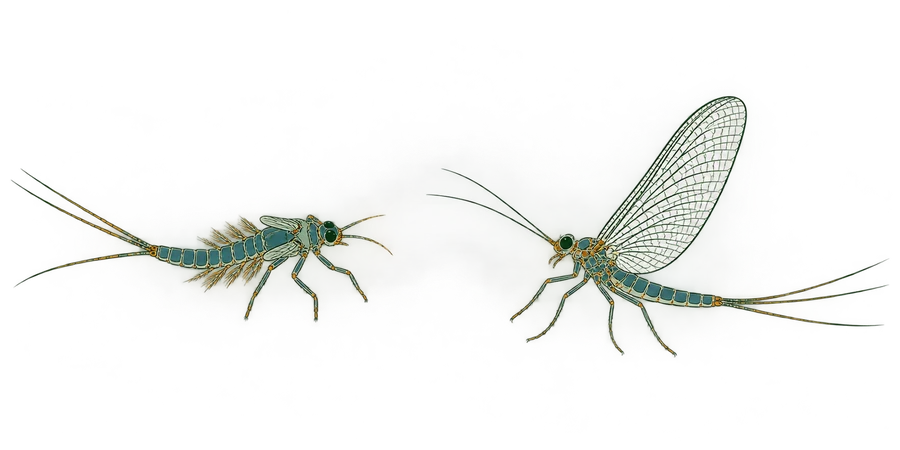
Egg → Nymph → Dun → Spinner, with no pupal stage. Nymphs fall into swimmer, clinger, crawler, or burrower types depending on the water they live in (Catch and Hatch, Take Me Fishing).
- Pheasant Tail Nymph
- Perdigon
- RS2
- Barr's Emerger
- Comparadun
- Parachute Adams
- Purple Haze
- Colorado Green Drake
- Adams
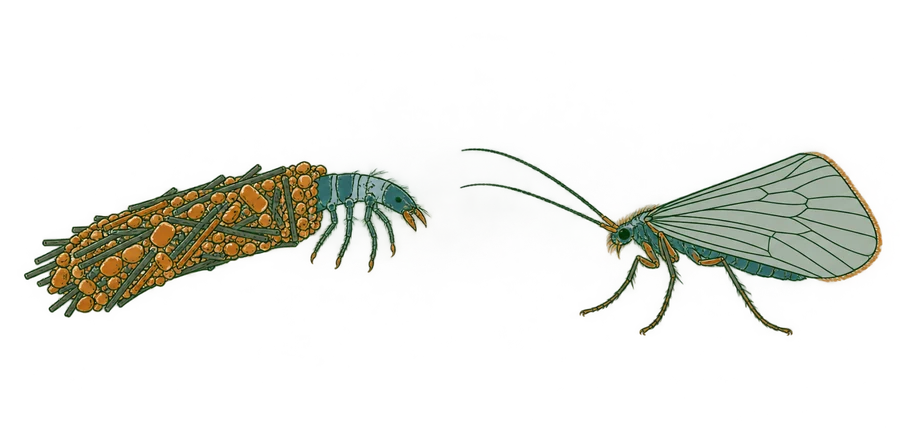
Egg → Larva → Pupa → Adult. Tent-shaped wings at rest are the giveaway; over 1,000 species exist in sizes roughly #24–#14 (Take Me Fishing).
- Elk Hair Caddis
- X-Caddis
- LaFontaine's Sparkle Pupa
- Caddis Pupa
- Buckskin Caddis
- Bird's Nest
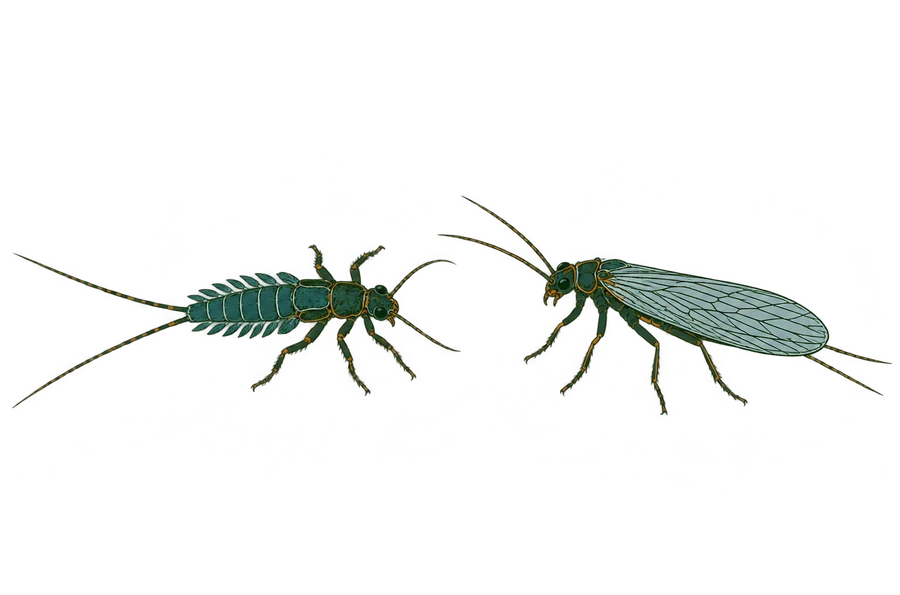
Egg → Nymph → Adult. Nymphs crawl out onto rocks to hatch rather than emerging through the water column. Especially important in rocky, freestone rivers, in sizes roughly #2–#20 (Take Me Fishing).
- Pat's Rubber Legs
- Kaufmann's Stone
- Chubby Chernobyl
- Girdle Bug
- Yellow Sally
- Twenty Incher
- Barr's Tungstone
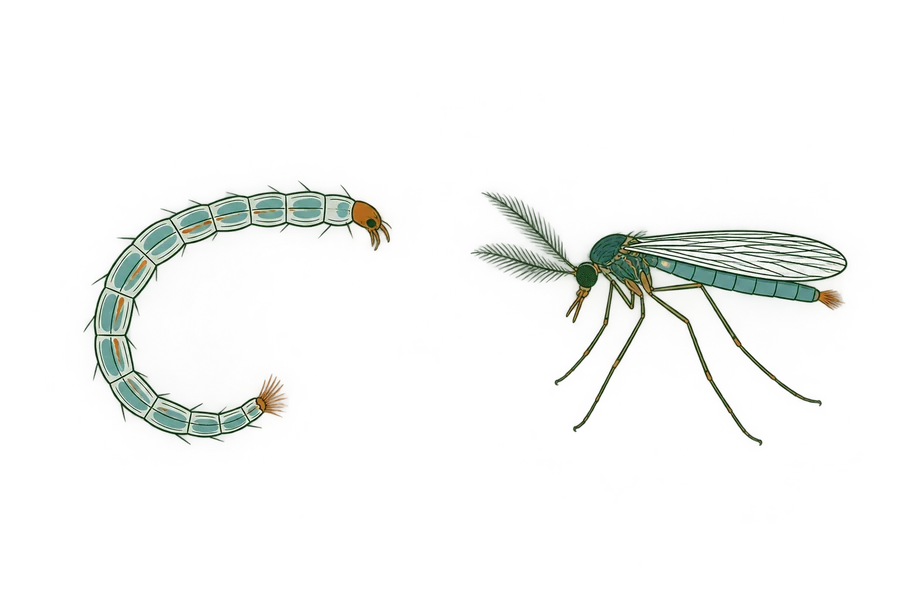
Egg → Larva → Pupa → Adult. The smallest food source on this list, but the most consistent: midges are active in every season, including the depths of winter (Catch and Hatch).
- Black Beauty
- Top Secret Midge
- Griffith's Gnat
- Zebra Midge
- Disco Midge
- Jujubee Midge
- Mercury Midge
Don't forget terrestrials
Ants, beetles, and grasshoppers aren't aquatic insects at all; they just end up in the water. They become a major part of a trout's diet in late summer, especially on windy days near grassy banks (Take Me Fishing). See the Fly-Fishing 101 hopper note on Getting Started for seasonal timing.
Complete metamorphosis
Midges & CaddisfliesFour distinct stages, including a pupal stage where the insect transforms before becoming an adult (RiverBum).
Incomplete metamorphosis
Mayflies & StonefliesThree stages, no pupa: the juvenile form is correctly called a "nymph," not a "larva" (RiverBum).
Six knots, every connection reel to fly
A trout rig is really just three connections repeated: fly to tippet, tippet to leader, and leader to fly line. Master one reliable knot for each, plus a fast backup, and you can tie any rig on this page (Vail Valley Anglers).
Fly-to-Tippet
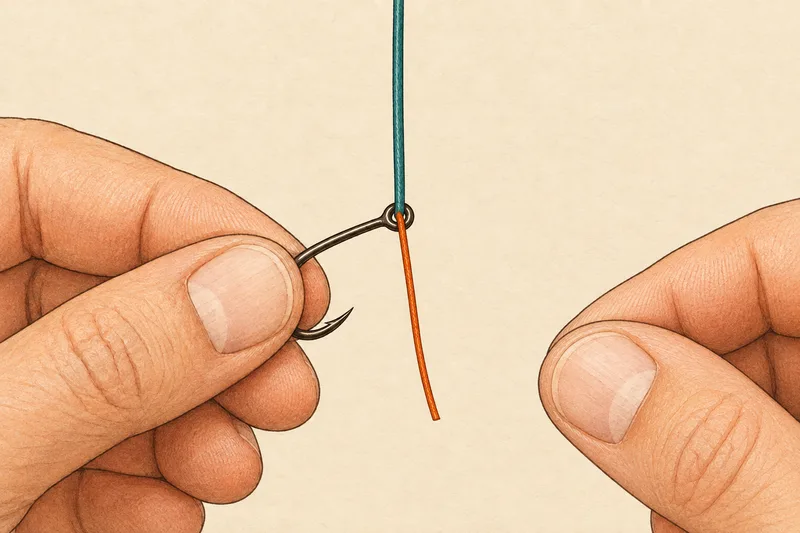
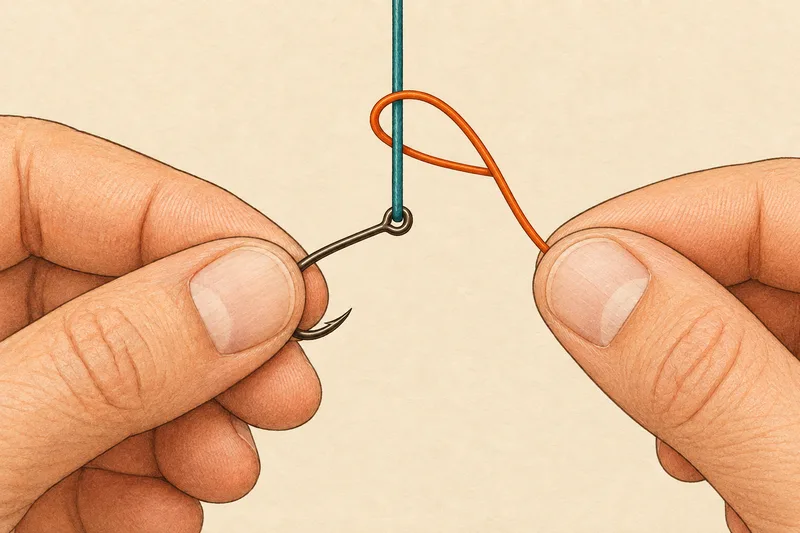
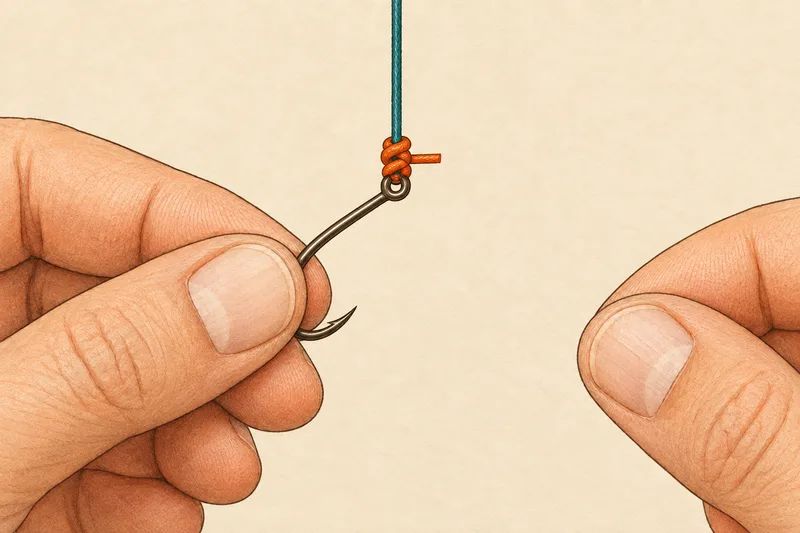
Connects your fly to the end of your lineThe standard for tying tippet directly to a fly's hook eye: wrap the tag end around the standing line, then pass it back through the loop before cinching down.
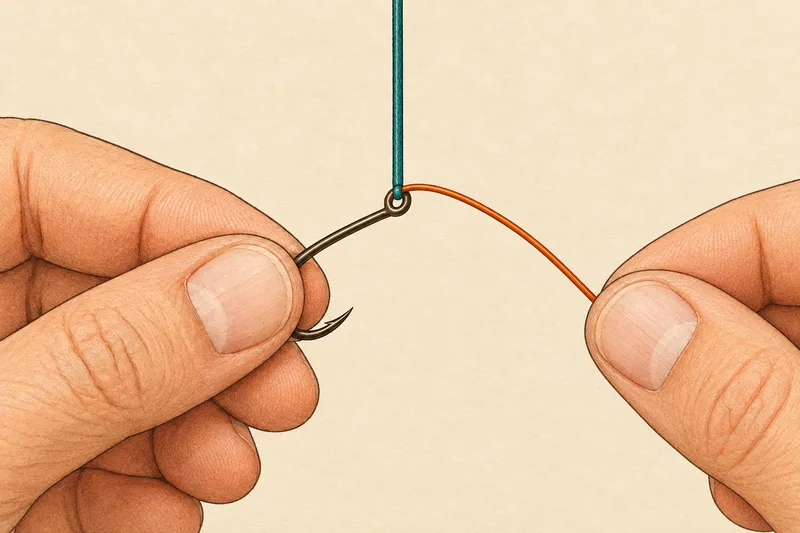
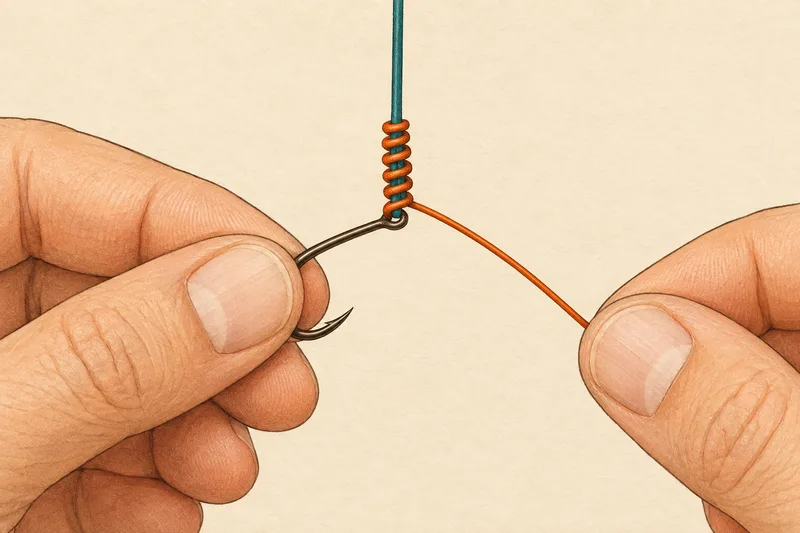
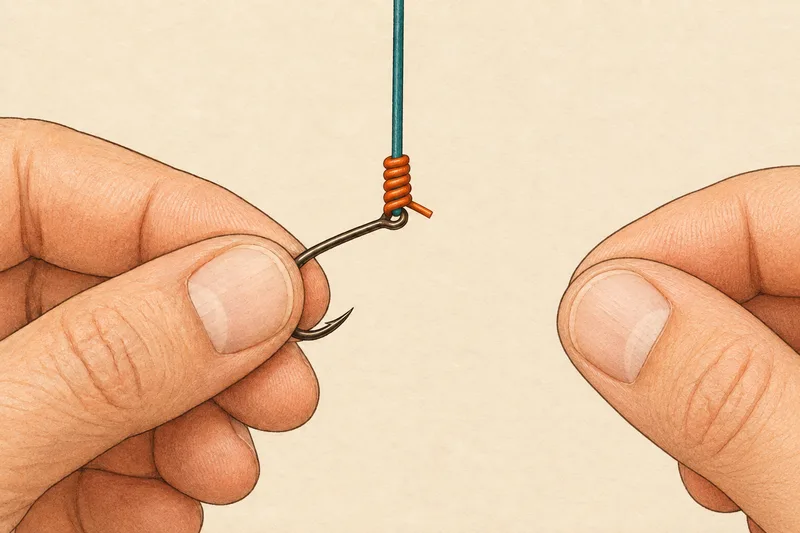
A tiny, fast four-step tie: pass the tag over and around the standing line, then thread it up through the loop once before pulling tight.
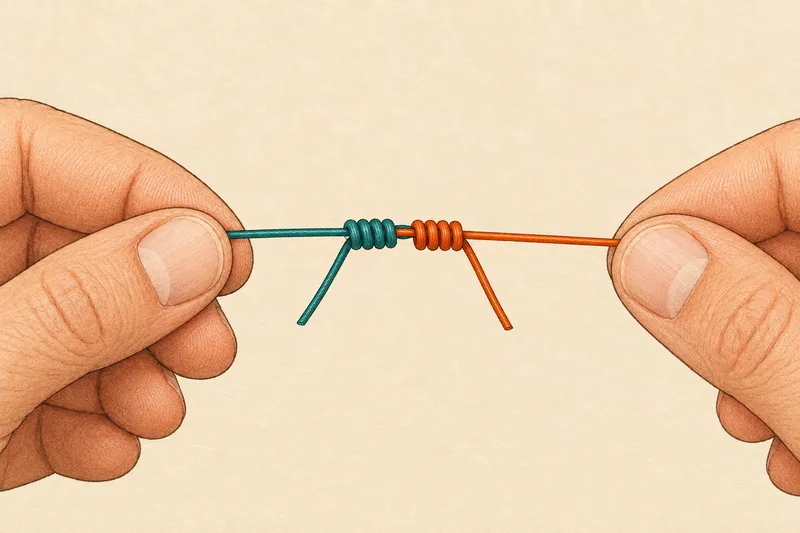
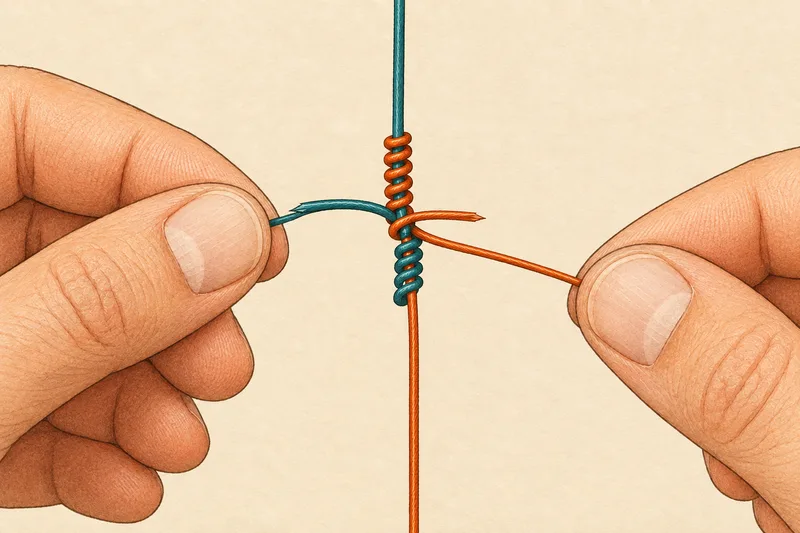
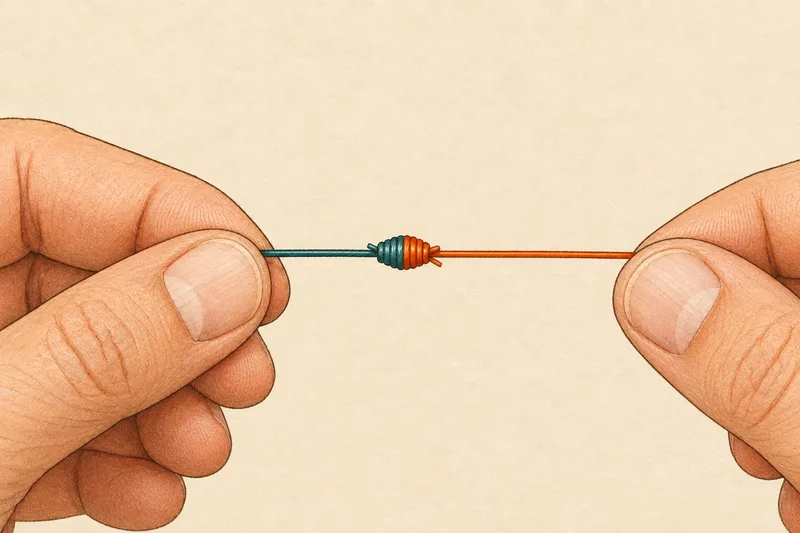
Line-to-Line
Joins tippet to leaderLay the two lines side by side overlapping a few inches, then tie an overhand knot (double it for extra security) using both strands together as if they were one.
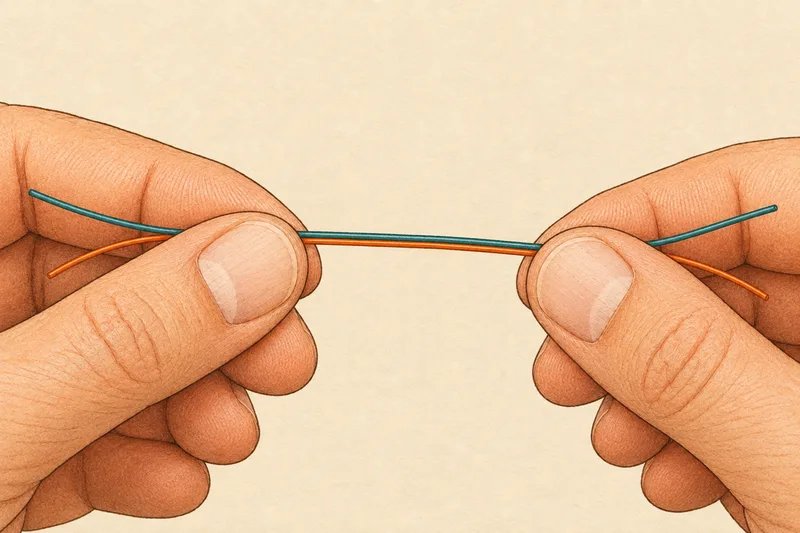
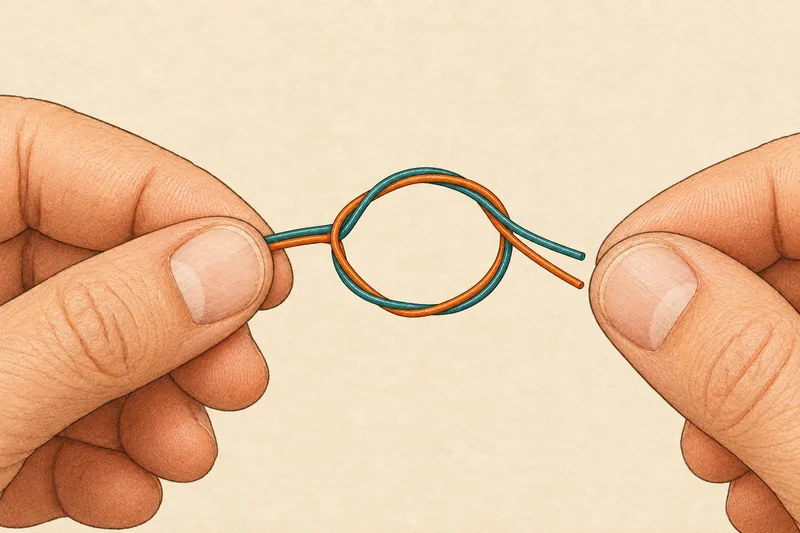
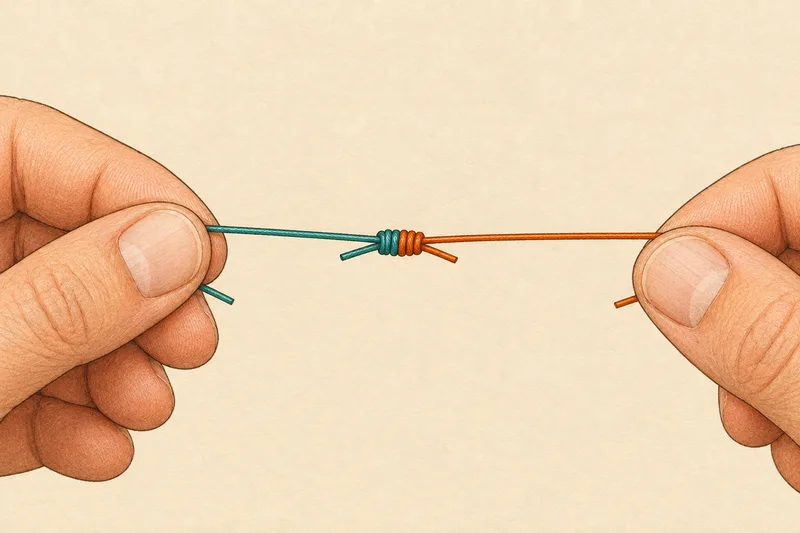
Wrap each tag end around the opposing standing line several times, then feed both tags back through the center gap in opposite directions before drawing it closed.
Leader-to-Fly-Line
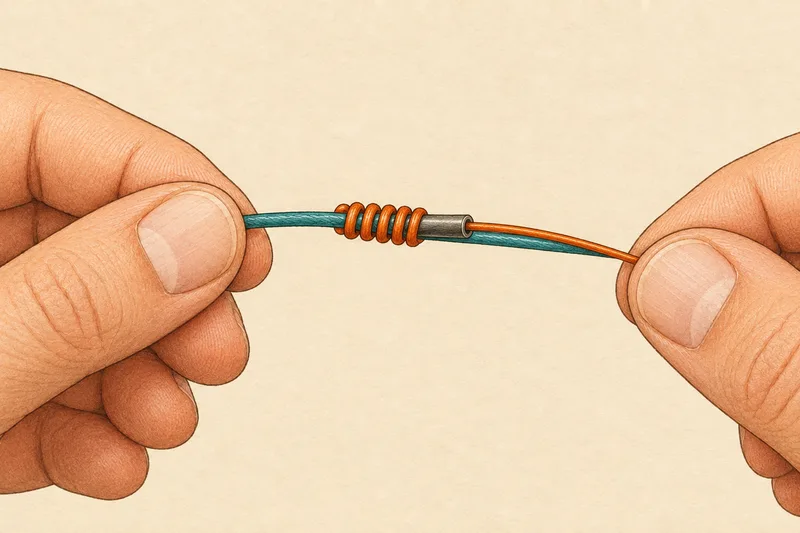
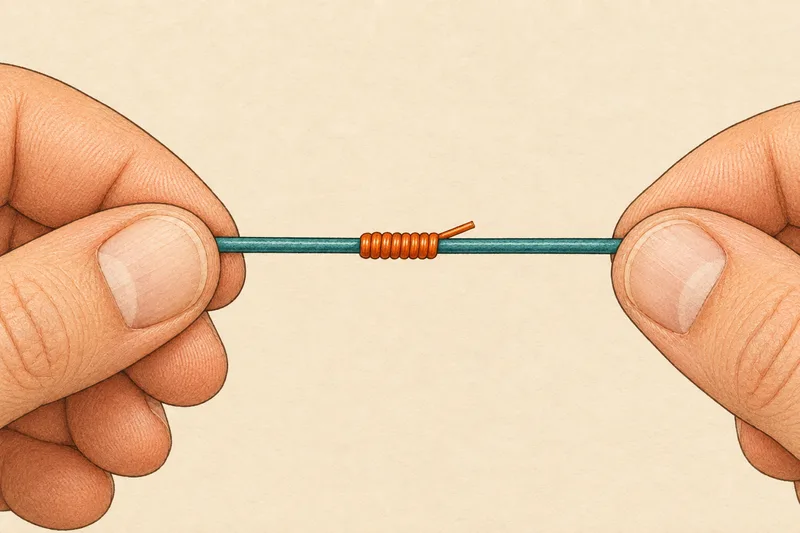
Rigs your line systemTie a small fixed loop in your leader butt (a Perfection Loop works well) and pass it through the factory loop on your fly line, then interlock the two into a figure-eight.
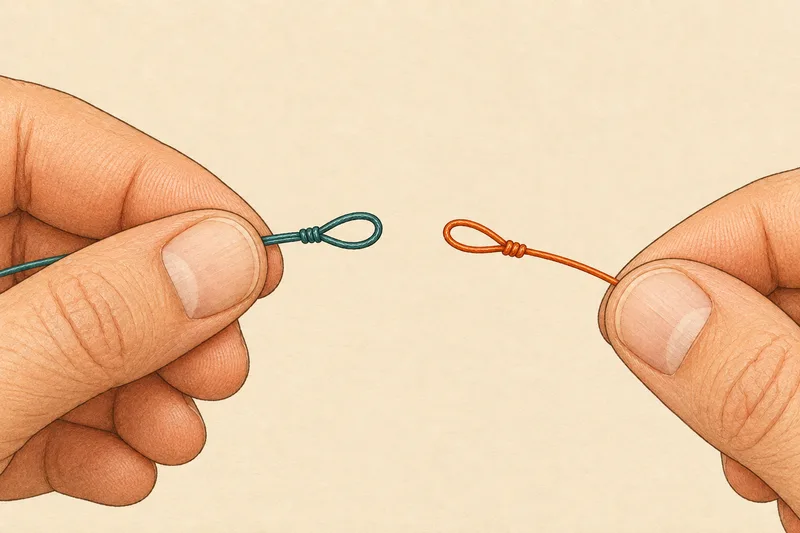
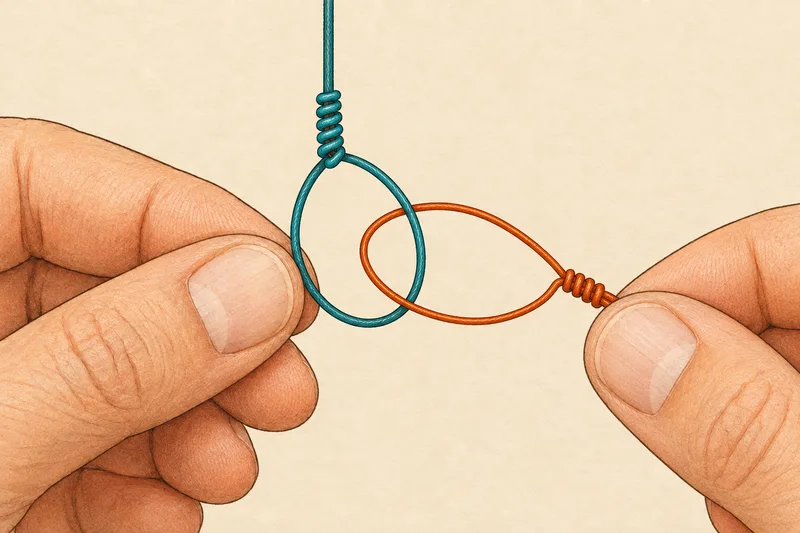
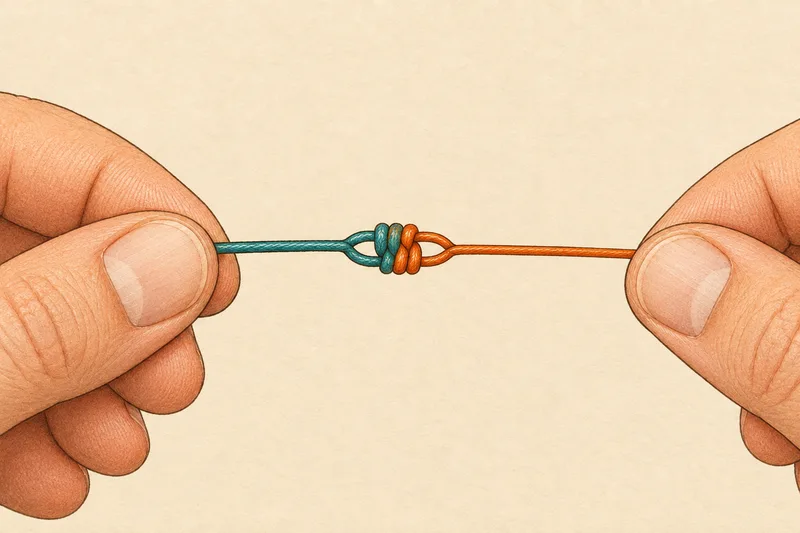
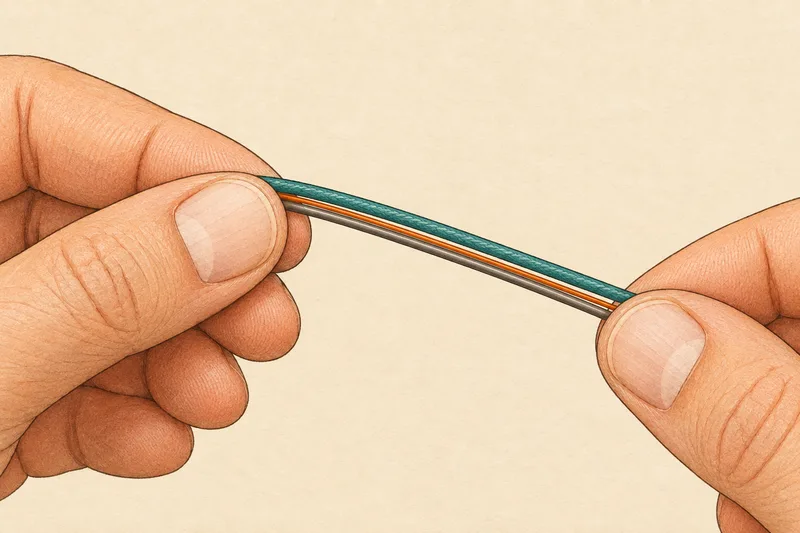
Coil the leader butt tightly around the fly line and a thin tube several times, then feed the tag end back through the coils and slide the tube out to cinch it down.
Dial in indicator position & dropper length
Set your water depth, current speed, and rig: the calculator applies the multiplier rule guides use in the field.
Watch: how to set your indicator depthSlide to match the run, riffle, or pool you're fishing.
Baseline current: typical run or riffle.
Depth-adjustment reference card
Pre-calculated indicator distances, dropper lengths, and split-shot sizes for common depths and current speeds. Tuck it in your vest.
Watch: the indicator-depth rule explainedIndicator Depth & Dropper-Length Cheatsheet
Generated for trout water ·
| Water Depth | Indicator distance above point fly (Indicator Nymphing) | Dry-Dropper Length | Suggested Split Shot | ||
|---|---|---|---|---|---|
| Slow (1.25×) | Moderate (1.5×) | Fast / Turbulent (2×) | |||