

Fish by Species
Choose the fish, plan the day. Explore sourced Colorado outings with public access, seasonal guidance and clear limitations.
Loading the curated shortlist…
Species matches to consider
Seasonal fit, then species evidence, not predicted catch odds. A match is not a go-ahead: check temperature, closures, weather and access before you fish.
Matching destinations with notices or warnings
Not in the recommended shortlist. Read exact boundaries and hours: a downstream or part-day notice does not close an entire river. Future dates do not establish that an unresolved notice will be lifted.
Outside this date's researched outing window
These are species matches, not recommended open-water outings for the selected date. A seasonal window is not a legal opening date or proof that fish are absent.
Species reported, but not a strong target recommendation
These are alternatives to investigate, not extra recommendations added to fill the list.
How we choose these waters
We separate official fishery evidence, secondary guide recommendations, and mere species presence. For your date, sourced seasonal fit comes first, then evidence strength. This is editorial order, not a calculated catch probability. We show all matching records and never relax filters to fill the list. Counties without research stay visible in the dropdown with zero counts.
Some sources establish year-round fishing or useful months; others do not. We label unknown seasonal timing rather than inventing a peak. Future trips use seasonal guidance, not today's flow as a forecast. All rules, road access, weather, closures and water temperatures need rechecking before departure.
Gauge data attach only to the configured reach. Missing, stale or unavailable data never mean good conditions. For today's trip, notices, heat and adverse flow move a target out of recommendations. For future dates, unresolved reach notices still require review, but current heat/flow does not predict your trip. Ungauged destinations need a local conditions and closure check.
TroutTips starts flagging heat at 67°F; CPW advises moving elsewhere at 70°F. Carry a thermometer, respect voluntary and mandatory restrictions, and avoid disturbing spawning fish or their beds. CPW fishing and conservation guidance.
Sources and access were reviewed 2026-09-29; the underlying survey or article can be older. Read each card's evidence date and limitations. This is a small curated catalog, not a complete Colorado inventory. Basic approach suggestions do not unlock or replace Rig of the Day.
Colorado fish identification & outing guides
Compare identifying features and researched places to fish. These guides are available without using the filters.
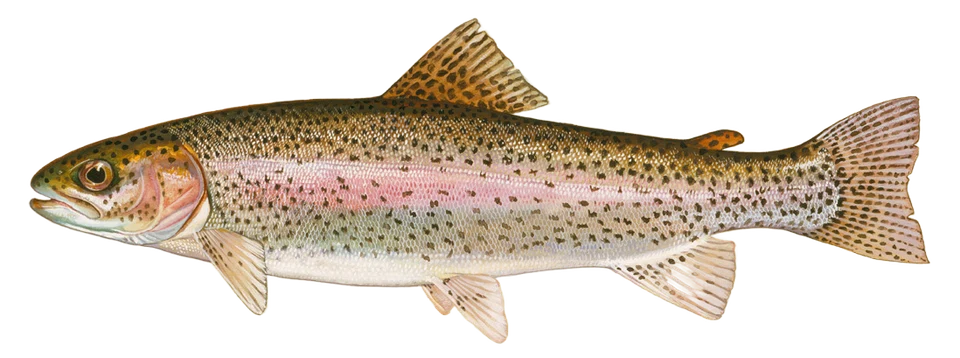
- A pink or red side stripe is common, but lake fish can look much more silver.
- Dark spots extend across the back, sides and tail.
- Compare the whole fish, not just the stripe: Cutthroat and hybrids can share similar colors.
Identification: Idaho Fish and Game identification guide. These references support identification, not Colorado fishing regulations.
Color varies with habitat and life stage. A photograph alone is not a reliable way to rule out a Cutthroat–Rainbow hybrid.
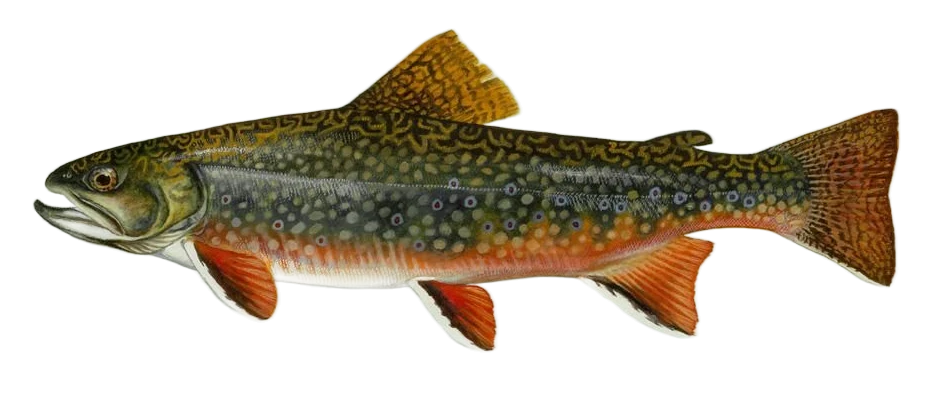
- Look for pale, worm-like markings on the dark back and dorsal fin.
- Red spots often have bluish halos, alongside lighter spots on the body.
- Lower fins have a white leading edge; the tail is nearly square or only slightly forked.
Identification: Idaho Fish and Game identification guide. These references support identification, not Colorado fishing regulations.
The bright belly in this illustration is not present on every fish. Use the markings and fin edges together.
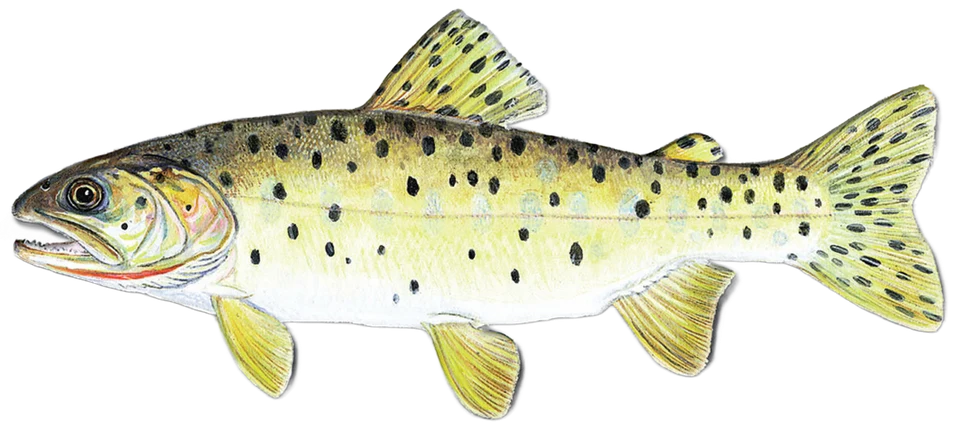
- Look for red or orange slashes beneath the lower jaw.
- Dark spotting is often more concentrated toward the tail; body colors vary.
- A throat slash alone does not establish subspecies or genetic purity: Cutthroat can hybridize with Rainbow Trout.
Identification: Idaho Fish and Game identification guide. These references support identification, not Colorado fishing regulations.
The illustration shows a Bonneville Cutthroat, not a Colorado subspecies example or proof of the fish found at any listed outing. Color and spotting vary among Cutthroat. Cutbow hybrids are not counted as pure Cutthroat targets.
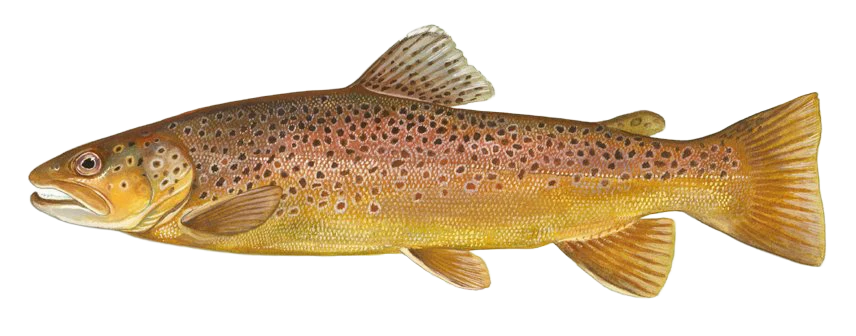
- Dark brown or black spots, often with red spots, sit on a lighter brown, gold or olive body.
- Many spots have pale halos around them.
- The tail usually has few or no spots, unlike the heavily spotted tail typical of Rainbow Trout.
Identification: Idaho Fish and Game identification guide. These references support identification, not Colorado fishing regulations.
Body color alone is not enough. Compare the spot pattern and tail, and remember that individual fish vary.
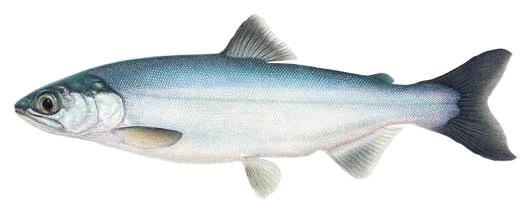
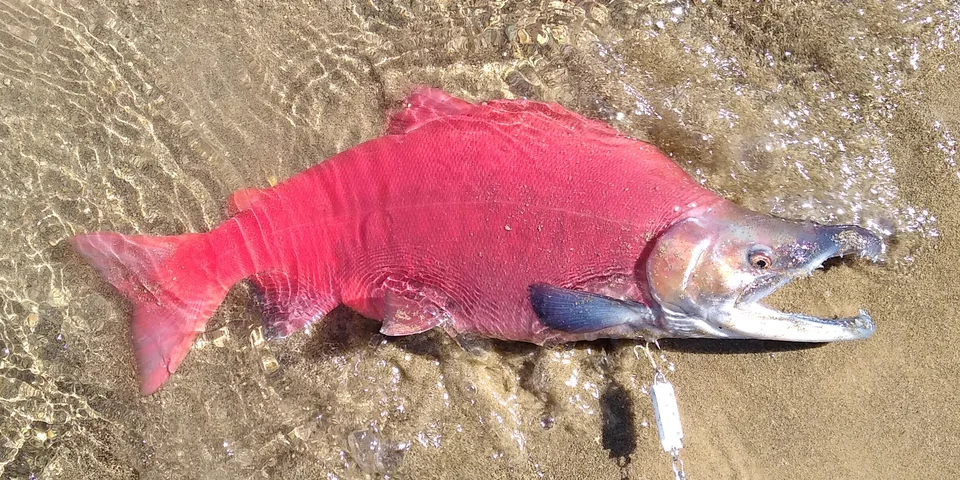
- Outside spawning condition, the body is silvery with a blue-green back.
- There is no distinct Rainbow-like spotting pattern on the tail and dorsal fin.
- During spawning, the body turns red and the head darkens toward green; males can develop a pronounced hump and hooked jaw.
Identification: Idaho Fish and Game identification guide; Utah fish identification guide. These references support identification, not Colorado fishing regulations.
The silver-form illustration and spawning photograph show different life stages, not two species. The spawning photo is from Utah; neither image is evidence of a Colorado run today.
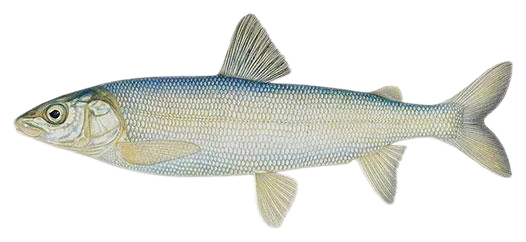
- A small mouth sits below a pointed snout.
- Large, conspicuous scales cover the silvery sides.
- Look for a deeply forked tail; the grayish-blue back fades to a whitish belly.
Identification: Parks Canada identification guide; Idaho Fish and Game identification guide. These references support identification, not Colorado fishing regulations.
Use the mouth, scales and tail together rather than identifying a fish from its silver color alone. This reference illustration is not a current Colorado catch report.